The Old Custom That Was Never Quite the Same
Why traditions change over time: see how familiar names endure as customs adapt their details, meanings and participants to fit everyday life.
Why do traditions change over time even when families say they have always done things the same way? A familiar custom can keep its name while its purpose, participants and small details shift from one generation to the next. The continuity is real, but it is rarely a perfect copy.
Names outlast details
A custom is not a sealed object handed down intact. It is a pattern people repeat: a meal, a greeting, a gathering, a song or a particular way of marking a moment. Each repetition draws on what came before, but people still decide what to do this time.
The name often does more to signal continuity than any single detail. A family may call its annual gathering “the winter supper” even after the original meal has changed, the venue has moved and the guest list has widened. The label gives participants a thread to follow, though the experience at either end of that thread may differ.
That does not make the custom false or merely invented. It means that tradition is sustained through recognition: people understand that this occasion belongs to an existing pattern, even as they adapt it to the lives they have now.
Repetition invites adjustment
Every repeated custom meets new circumstances. Someone moves away, a workplace changes its opening hours, a household gains new members, or an old activity becomes difficult to arrange. Participants respond in practical ways, often without holding a formal discussion about whether the tradition is changing.
Small adjustments can accumulate. A meal that once depended on everyone bringing a dish may become a shared order from a local bakery. A seasonal visit might shift to a video call for relatives who cannot travel. The central act of gathering may remain, while the means of making it happen changes around it.
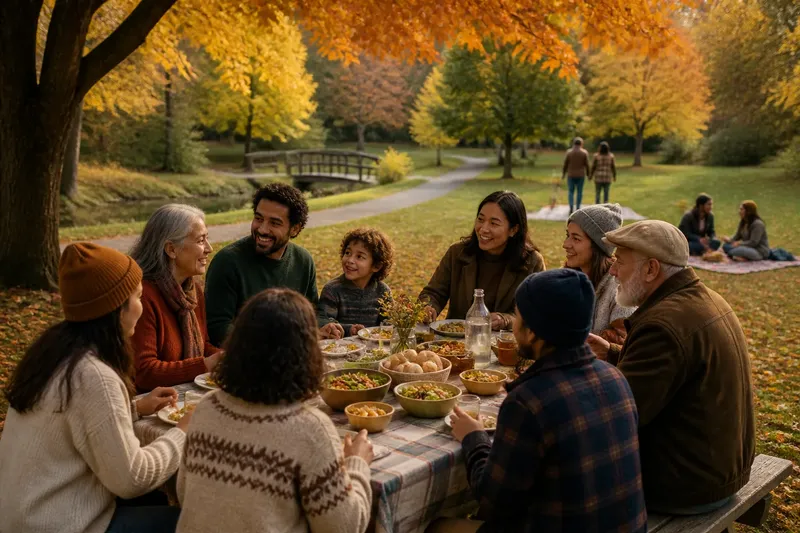
Imagine a family that calls its autumn walk “the orchard day”. The orchard closes to visitors, so the family chooses a nearby park, keeps the same picnic and invites a new cousin who has recently moved to the area. Participants may still recognise the day as their old custom, but its setting and social purpose have both broadened.
Meanings move too
Details are easy to spot; changes in meaning can be quieter. A custom may begin as a practical response, then become a way to express belonging. Later, participants may value it chiefly as a chance to remember someone, welcome a newcomer or spend time together without a specific task.
Different people can also attach different meanings to the same practice. One person may see a regular family meal as a link to childhood; another may value it because it makes room for conversation amid busy routines. Neither interpretation has to cancel the other. Customs can hold several purposes at once.
Meaning may shift when a custom travels between groups or settings. A greeting that feels intimate among relatives might become a public sign of local identity at a community event. The outward action can look similar, while the audience and what the gesture communicates have changed.
Who gets to keep it?
Customs are shaped not only by what people repeat, but by who is invited to take part and who has a say in changing the pattern. A practice once organised by one branch of a family may become shared across several households. A community gathering may make room for people whose connection to the place is newer than that of its original organisers.
These changes can bring warmth and disagreement together. Someone who remembers an earlier version may feel that a cherished detail is being lost, while another participant sees a welcome improvement. Listening to both views helps distinguish a meaningful symbol from a detail that can change without leaving people behind.
It is useful to ask what participants hope the custom will do now. If the answer is to remember, welcome, celebrate or reconnect, that purpose can guide decisions about the format. The question is not simply whether a version is old enough to count; it is whether people recognise and care for the thread connecting it to what came before.
What keeps a custom familiar?
Does changing a detail break a tradition?
Not necessarily. If participants still recognise the practice and connect it to a shared pattern, a changed setting or menu can sit within the tradition rather than replace it.
Why do people remember older versions differently?
Memory tends to preserve the parts that mattered most to each person, not a complete record of every occasion. Two relatives can honestly recall the same custom in different ways because they took part in different roles or at different stages of its life.
Can a recently adopted practice become a tradition?
Yes, if people repeat it and come to treat it as part of a shared pattern. A practice does not need a distant origin to carry meaning; its significance can grow through use and recognition.
How can a group change a custom without losing its point?
Start by asking what participants value about it, then identify which details serve that purpose and which are simply familiar habits. This makes room for thoughtful changes without pretending everyone has the same memory or preference.
Continuity without a perfect copy
When people say a custom has “always” been done a certain way, they may be describing its emotional shape rather than its exact history. The phrase can mean that the practice feels rooted, familiar and worth returning to, not that every detail has remained fixed.
That distinction is especially helpful when a change feels unsettling. Rather than asking whether a new version is identical to the old one, consider what still connects the two: a shared name, a recurring invitation, a familiar gesture or the intention to gather. Those links are often how a tradition remains recognisable while continuing to fit the people who carry it.
So, when a custom changes again, notice what participants choose to preserve and what they are willing to reshape. The name may be old, but the next repetition is also a fresh act of keeping it alive.